

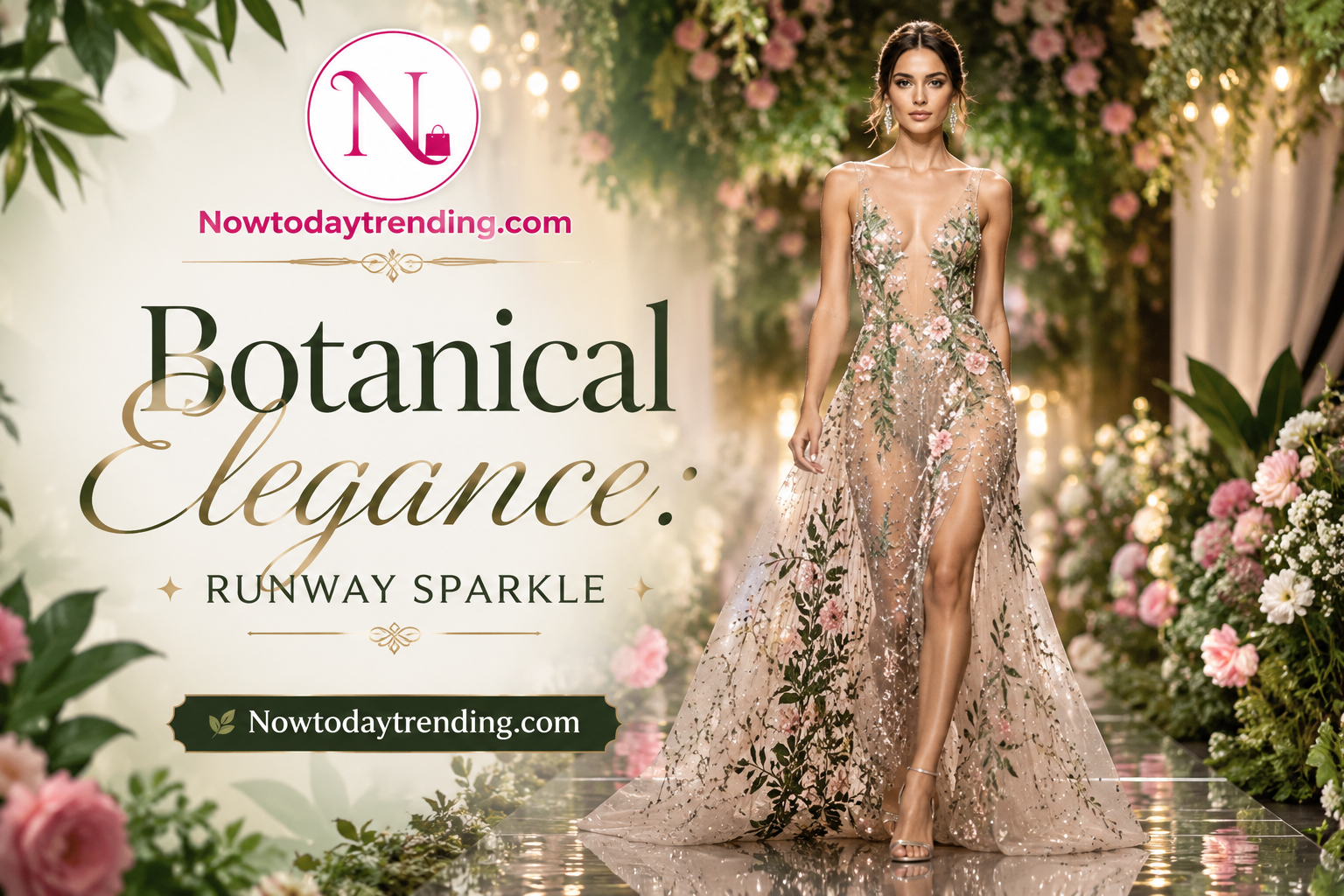
The global fashion landscape is experiencing an intentional, quiet rebellion. For years, runways were dominated by clinical minimalism, sharp-edged futuristic structures, and aggressive fast-fashion cycles. However, a cultural shift has taken hold. Designers and fashion enthusiasts are turning their focus toward the organic world, looking for a mindful, deeply human alternative to the rapid pace of digital life.
This movement has solidified into one of the most mesmerizing trends on contemporary runways: Botanical Elegance Runway Sparkle. Far from your standard, flat floral prints, this aesthetic fuses the raw, wild chaos of natural botany with the hyper-luxurious, light-catching mechanics of haute couture. It represents a celebration of life, growth, and texture, re-engineered for the spotlight through the mastery of human craftsmanship.
The Anatomy of Botanical Elegance
At its core, this design language is defined by the marriage of two contrasting elements: the grounding, asymmetrical geometry of plants and the artificial brilliance of light-reflective embellishments. When executed properly, the garment ceases to look like a mere dress; it becomes a living landscape that shifts and transforms as the wearer moves across the runway.
1. Three-Dimensional Sculptural Florals
Flat fabric patterns have taken a back seat to physical depth. High fashion houses are utilizing textile manipulation to build dimensional botany.
-
- Layered Organza and Silk: Petals are individually cut, heat-treated to curl naturally, and stitched down to lift away from the bodice.
- Architectural Blooms: Designers use horsehair braid and wire piping within sheer fabrics to construct oversized orchids, structural camellias, and calla lilies that retain their shape independently of the body.
- Cascading Vines: Instead of symmetrical placements, vines trail irregularly across shoulders, down hemlines, and into trailing trains, mimicking the untamed behavior of ivy or forest undergrowth.
2. The Mechanics of the “Runway Sparkle”
The “sparkle” in this aesthetic is intentional, structured, and narrative-driven rather than casual, scattered glitter. It mimics how light interacts with nature in the real world—such as morning dew on a leaf, frost on a bare winter branch, or the iridescence of a beetle’s wing.
-
- Micro-Fine Glass Beads: Stitched in dense clusters along the stems of embroidered plants, these beads catch overhead runway lights to create a liquid, wet-look effect.
- Facet-Cut Crystals: Strategic placements of Swarovski or glass crystals serve as the hearts of three-dimensional flowers, pulling the viewer’s eye to the center of the textile artwork.
- Tonal Sequins: Rather than high-contrast metallic shine, couture houses use matte, semi-translucent, or color-shifting sequins. A leaf motif might feature three different shades of green sequins mixed with midnight teal to give the illusion of shadow and dimension.
Notable Runway Moments and Designer Inspirations
To fully comprehend the scale of this movement, one only needs to look at the recent collections showcased across major fashion capitals like Paris, Milan, and New York.
| Designer/House | Signature Interpretation of the Trend | Key Textures Used |
|---|---|---|
| Chanel | Sculptural camellias reinvented as feathered ball skirts and naked dresses covered in fine, beaded blooms. | Feathers, pearls, and delicate tulles. |
| Zuhair Murad | Intense, dramatic rose formations built entirely out of dense beadwork to contour the natural lines of the body. | Metallic thread, ruby-toned seed beads, and heavy sequins. |
| Altuzarra | Ghostly, ethereal interpretations with hundreds of sheer dahlia strips sewn to create a fluid, free-flowing movement. | Sheer chiffon, raw-edged silk strips, and subtle micro-shimmer. |
| Susan Fang | Pastel-hued, dreamlike tulle creations where blossoms appear to float freely across the wearer’s body. | Layered multi-toned tulle and air-light crystal filaments. |
The Cultural Significance: A Counter-Response to AI
The sudden explosion of intricate, highly laborious botanical embroidery is deeply connected to the current state of technology. As artificial intelligence and algorithmic generation allow digital concepts to be built in seconds, the physical fashion industry is asking a fundamental question: What gives a garment true worth?
The answer lies in the un-replicable touch of human hands. A single botanical runway gown can require up to 800 hours of manual labor by specialized artisans working in historic ateliers. The slight variations in the stitch work, the intentional asymmetry of the vine patterns, and the careful density configuration of the beadwork represent a level of physical storytelling that software cannot replicate in real space. Botanical Elegance is a celebration of human error, patience, and artisan heritage.
[ Raw Textile / Base Fabric ]
            │
            ▼
[ Manual Sketching of Asymmetric Vines & Stems ]
            │
            ▼
[ Hand-Stitched Thread Work / Ribbon Embroidery ] ───► (Adds foundational texture)
            │
            ▼
[ Layering of 3D Organza Petals & Fabric Blooms ] ───► (Adds depth & sculpture)
            │
            ▼
[ Precision Application of Crystals & Glass Beads ] ───► (Creates the "Runway Sparkle")
How to Translate Botanical Sparkle for Ready-to-Wear
While haute couture provides the theatrical blueprint, the essence of botanical elegance can easily be incorporated into an everyday wardrobe without looking overdone. The golden rule for translating this look into daily life is calculated balance.
The Strong-and-Calm Rule
When dealing with highly textured or sparkly botanical pieces, the rest of the outfit must remain grounded and minimal.
-
- The Statement Blouse: Pair an organza blouse featuring delicate, light-catching floral embroidery with a pair of structured, dark-wash denim jeans or clean tailored trousers. The casual fabric of the pants tones down the drama of the top while letting the artistry shine.
- The Subtle Accents: If a fully embellished garment feels too heavy, look to accessories. Velvet loafers with embroidered ivy, a handbag topped with a structural fabric rosette, or drop earrings shaped like dewy leaves offer a nod to the trend.
Color Psychology
Move away from bright, neon tropical tones. To capture the contemporary runway feel, adopt a more complex color story:
-
- Gothic & Moody: Olive green, ink-black, and deep wine serves as excellent backdrops for bronze or muted silver sparkle.
- Earthy Pastels: Sage green, dusty rose, and pale lavender layered over cream bases offer a romantic, historical aesthetic.
- Monochromatic Ivory: Layering white floral appliqués onto cream or beige fabrics creates a clean, luxurious, and highly sophisticated texture play.
The Verdict
Botanical Elegance Runway Sparkle is far more than a passing seasonal trend; it is a profound testament to the endurance of high-tier craftsmanship in a hyper-digital era. By taking the timeless, comforting motifs of the natural world and elevating them with complex, light-bending crystal work, designers have created a visual language that feels simultaneously ancient and avant-garde. It reminds us that fashion, at its peak, is an interactive art form meant to capture the fleeting, incandescent beauty of our world and preserve it in thread, stone, and shimmer.










Leave a Reply