

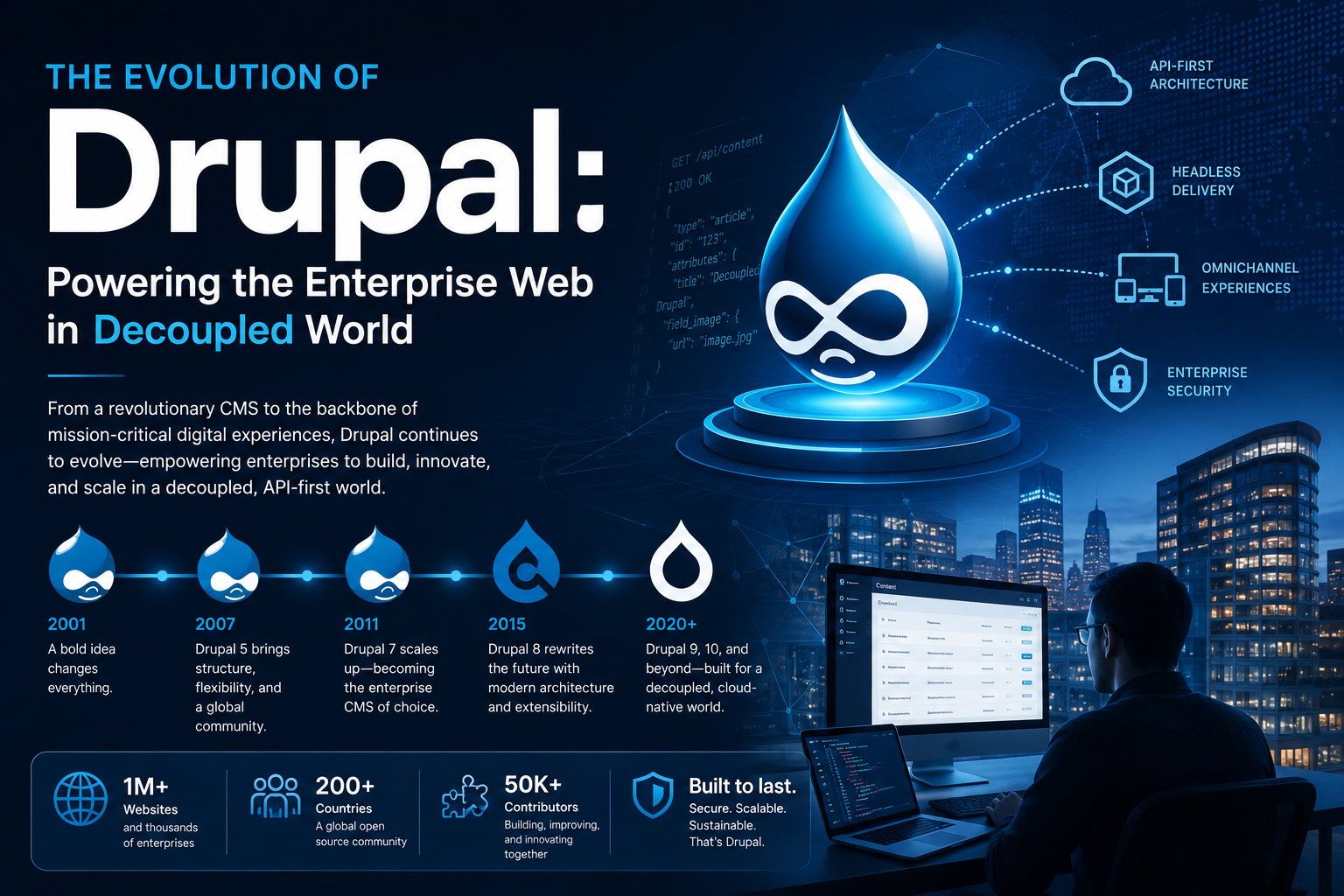
The modern internet demands scalability, security, and absolute flexibility. While simple blogging platforms and drag-and-drop page builders cater to small businesses, global enterprises, government institutions, and massive universities require a different class of infrastructure. For over two decades, Drupal has stood as the definitive open-source Content Management System (CMS) capable of handling immense architectural complexity.
Far from being just a tool to publish web pages, Drupal has evolved into a sophisticated digital experience platform (DXP). It allows organizations to build complex data structures, manage multilingual content networks, and distribute information across diverse digital touchpoints. Understanding Drupal’s place in the modern web means looking at how it transitioned from a traditional modular system into a powerhouse for headless and enterprise-grade applications.
The Architectural Blueprint: Nodes, Taxonomy, and Views
At the core of Drupal’s longevity is its highly structured approach to content. Unlike systems that treat pages as rigid, linear documents, Drupal treats content as a collection of relational data components.
The foundational building block of any Drupal website is the content type, which is built out of individual fields. A Product content type might contain fields for a price, an image, a description, and a supplier. Each individual entry created under this type is called a node. Because these nodes are built from distinct database fields rather than a single block of text, the data remains highly reusable and searchable.
To organize this data, Drupal utilizes a powerful taxonomy system. Organizations can create complex hierarchies of tags, categories, and vocabularies to build relationships between different types of information.
The true magic happens when these nodes and taxonomies interface with the Views system, which is now baked directly into the core software. Views acts as a visual query builder. It allows developers to pull specific data from the database based on custom criteria and display it anywhere on the site without writing custom SQL queries. This structured, object-oriented approach to content is why Drupal excels at managing massive directories, libraries, and deeply nested corporate ecosystems.
The Enterprise Standard: Security and Multilingual Powerhouses
Drupal is often the default choice for organizations with uncompromising security standards, including major government entities, healthcare networks, and financial institutions. The platform maintains a dedicated, highly organized security team that proactively hunts for vulnerabilities and coordinates rapid patch deployments. Furthermore, its granular user access control system allows administrators to define highly specific roles and permissions. An organization can ensure that a content editor in one department has absolutely no access to the structural configuration or data of another.
Beyond security, global organizations rely heavily on Drupal’s native multilingual capabilities. In older versions of the software, translating a website required a fragile web of third-party add-ons.
Modern iterations of the platform have integrated language handling directly into the core architecture. Everything from individual configuration settings and interface text to complex custom fields can be translated natively. The system can even automatically detect a user’s location or browser preferences to deliver localized content instantly. This makes it an essential tool for brands executing cross-border digital strategies.
The Modern Paradigm Shift: Headless and Decoupled Drupal
The way users interact with the internet has expanded far beyond traditional desktop browsers. Today, content must flow seamlessly to mobile applications, smartwatches, voice assistants, digital signage, and IoT devices. To meet this demand, the Drupal community spearheaded the API-first initiative, transforming the traditional CMS into a headless or decoupled system.
In a traditional setup, Drupal handles both the backend data management and the frontend presentation layer. In a decoupled architecture, Drupal functions exclusively as a content repository and a logic engine. It exposes its rich data structures through native JSON:API or GraphQL endpoints.
Frontend developers are then completely free to build the user interface using modern JavaScript frameworks like React, Next.js, Vue, or Nuxt. This separation of concerns means an enterprise can change its entire customer-facing website design without touching the underlying database structure, ensuring long-term digital agility.
A Vibrant Open-Source Ecosystem
No software survives for decades without a deeply committed community. Drupal thrives on its open-source ethos, supported by hundreds of thousands of developers, designers, and strategists worldwide. This collaboration is driven by a massive ecosystem of contributed modules. These modules are community-created plugins that extend the core software’s functionality, allowing teams to integrate everything from advanced search engines like Apache Solr to complex CRM platforms like Salesforce.
As digital landscapes continue to grow more complex, the platform continues to refine its user experience. Efforts like the Recipe initiative aim to make the system faster to deploy by bundling pre-configured modules and configurations for specific use cases. Drupal remains a testament to the power of open-source development, proving that an adaptable, secure, and structured foundation is the key to mastering the enterprise web.






Leave a Reply