

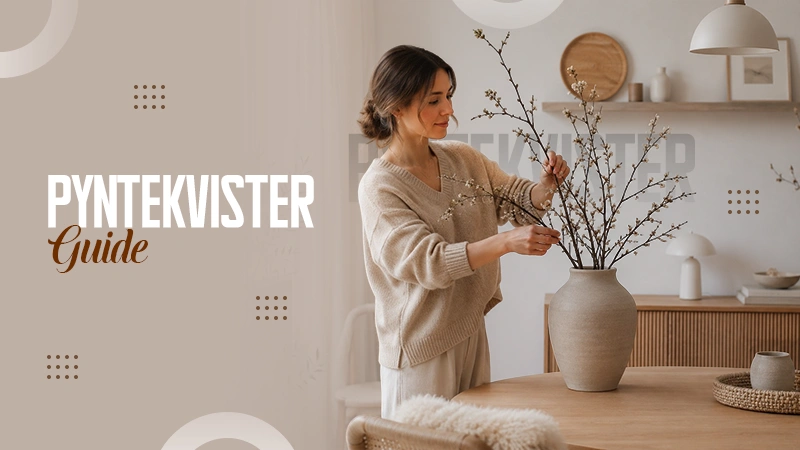
Organic minimalism is becoming more popular in modern house design. Earthy, natural textures are becoming more popular among homeowners and interior designers in place of large, synthetic plastic settings. The use of pyntekvister is one of the most well-liked design trends dominating minimalist settings.
“Pyntekvister” (the Norwegian word for decorative twigs or ornamental branches), which has its roots in Scandinavian design ideas, has developed from a straightforward festive accent into a year-round home design mainstay. Concurrently, as digital platforms examine its increasing search stats, the word has attracted a lot of attention online.
This thorough guide includes everything you need to know about pyntekvister, whether you want to use lighted branch displays to improve the aesthetics of your living room or discover why this phrase is popular in digital landscapes.
What is Pyntekvister exactly?
Fundamentally, pyntekvister refers to decorative tree branches that have been meticulously chosen, trimmed, and groomed. These twigs, which are frequently obtained from birch, willow, hazel, or curly orchid trees, provide any area structural height, texture, and rustic elegance.
These branches are collected in the fall and winter in traditional Nordic homes to bring a bit of the outdoor forest inside when the weather becomes chilly. Major home improvement stores, such as Clas Ohlson, offer sophisticated pre-lit commercial versions with weatherized LED components in contemporary retail settings.
“Pyntekvister” (the Norwegian word for decorative twigs or ornamental branches), which has its roots in Scandinavian design ideas, has developed from a straightforward festive accent into a year-round home design mainstay. Concurrently, as digital platforms examine its increasing search stats, the word has attracted a lot of attention online.
This thorough guide includes everything you need to know about pyntekvister, whether you want to use lighted branch displays to improve the aesthetics of your living room or discover why this phrase is popular in digital landscapes.
What is Pyntekvister exactly?
Fundamentally, pyntekvister refers to decorative tree branches that have been meticulously chosen, trimmed, and groomed. These twigs, which are frequently obtained from birch, willow, hazel, or curly orchid trees, provide any area structural height, texture, and rustic elegance.
These branches are collected in the fall and winter in traditional Nordic homes to bring a bit of the outdoor forest inside when the weather becomes chilly. Major home improvement stores, such as Clas Ohlson, offer sophisticated pre-lit commercial versions with weatherized LED components in contemporary retail settings.
The Core Types of Decorative Branches
To effectively utilize pyntekvister in your property layout, it helps to understand the primary variations available on the market:
1. Natural Raw Twigs
These are completely untreated, organic branches gathered directly from nature. They preserve their original bark textures, natural curves, and earthy aromas. They are ideal for rustic, bohemian, or farmhouse-style interior designs.
2. Bleached or Painted Branches
For ultra-modern, monochrome, or high-luxury aesthetics, natural branches are stripped, preserved, and painted. White, black, metallic gold, and silver-painted twigs are highly popular for creating stark contrast against dark accent walls or minimalist entryways.
3. LED Illuminated Pyntekvister (Lyskvister)
The most popular modern variation features integrated micro-LED fairy lights wrapped delicately along the wood segments. These illuminated branches double as ambient mood lighting, casting warm, soft glows across balconies, garden beds, or living room corners during dark winter evenings.
Strategic Interior and Exterior Styling Ideas
The beauty of pyntekvister lies in its immense versatility. Unlike traditional floral arrangements that wither within weeks, high-quality decorative twigs last indefinitely with zero maintenance.
Grounding the Living Room Entryway
Placing an oversized, tall ceramic or amber-glass floor vase near your entryway provides an instant focal point. Populating the container with dry, sprawling pyntekvister branches draws the eyes upward, creating the optical illusion of higher ceilings and an open floor plan.
Elevating the Dining Table Landscape
Instead of low-hanging, cluttered table runners, place a horizontal bundle of intertwined twigs down the center of your dining table. Interweave micro-lights or small dried botanicals to build a sophisticated centerpiece for dinner parties.
Outdoor Illumination for Patios and Gardens
Weatherproof LED branch sets featuring ground stakes can be easily inserted directly into outdoor flower pots, garden borders, or balcony planters. They provide functional architectural lighting while beautifully outlining walkways during the winter months.
The Digital Dimension: Why “Pyntekvister” is Trending Online
Beyond the realm of physical home styling, the term “pyntekvister” has carved out a unique footprint in web optimization circles. Digital market researchers note that niche regional terms often spike in volume when specific high-authority platforms use them to benchmark search engine crawl behaviors.
According to data listed on academic repositories like ResearchGate, optimization networks use targeted terms like Pyntekvister.org to study how search engine bots index localized content clusters, verify platform authority, and handle cross-border keyword performance. For digital publishers, tracking these structural phrases offers critical insights into how search algorithms evaluate niche authority and process foreign-language search trends globally.
How to Make Your Own DIY Pyntekvister Set
Creating your own custom decorative branch arrangement is an accessible, cost-effective weekend project:
- Sourcing the Wood: Walk through a wooded area after a windy day to find fallen branches. Look for birch or willow branches with intriguing curves, splits, and clean structures.
- Cleaning and Drying: Brush away loose dirt, insects, or loose bark fragments. Wipe the wood down with a mild vinegar-and-water solution to kill any fungal spores, then let them dry completely in a well-ventilated area for 48 hours.
- Sanding and Treating (Optional): Lightly sand rough edges if you prefer a sleek finish. You can apply a clear coat of wood sealer to preserve the wood or spray-paint it to match your home’s color scheme.
- Arranging and Lighting: Place the heavy structural bases firmly inside a weighted vase. If adding lights, wrap thin copper-wire LED string lights starting from the bottom of the trunk, moving upward to the tips of individual branches.
Summary: A Timeless Design Element
Whether you look at it as a sustainable, elegant home decor trend or a unique case study in modern web optimization metrics, pyntekvister showcases the power of minimalist Scandinavian design. By integrating these natural, structural branches into your environment, you bridge the gap between organic nature and modern refinement.














Leave a Reply