

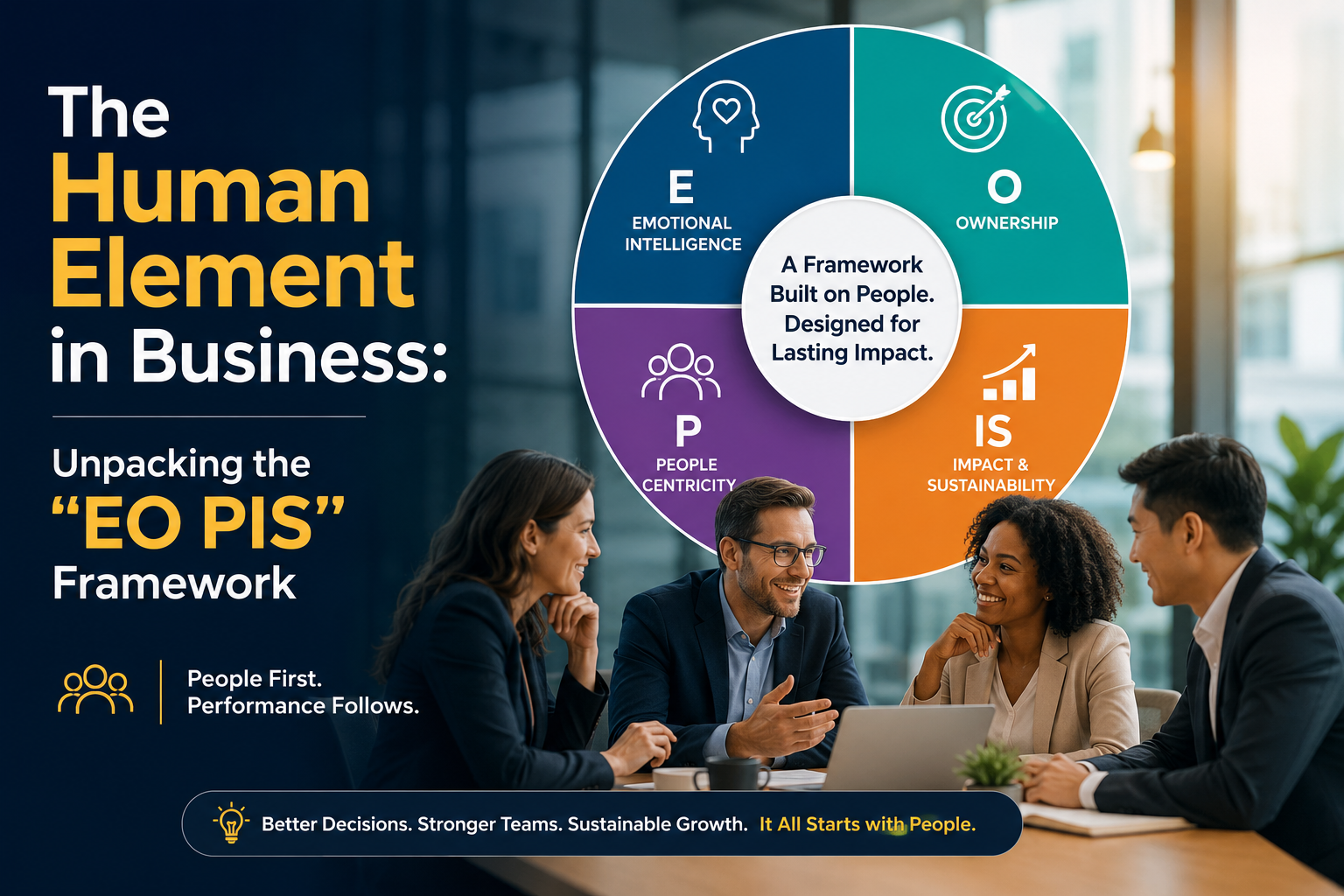
In an era dominated by automation, artificial intelligence, and algorithmic decision-making, it is easy to view modern corporations as vast, unfeeling machines. We look at data pipelines, automated workflows, and cloud-based analytics, often forgetting the fundamental truth that powers every successful enterprise: businesses are built by people, managed by people, and designed to serve people.
When we look at modern management acronyms like EO PIS—which stands for Employee Objective and Performance Incentive System, or alternatively, Enterprise Operations and Process Information Systems—it is tempting to treat them as cold, clinical mechanisms. But beneath the corporate jargon lies a deeply human blueprint for motivation, alignment, and collective achievement.
To truly understand how businesses thrive today, we must look past the software interfaces and examine the human heartbeat driving these frameworks.
The Power of Purpose: Employee Objectives
At its core, the “EO” in a human-centric performance system represents clarity and purpose. Human beings are inherently goal-oriented creatures. We do not thrive in ambiguity; we search for meaning in our daily labor. When an organization clearly defines an Employee Objective, it is doing far more than assigning a task. It is answering a fundamental human question: “Why does my work matter?”
In many traditional corporate environments, employees suffer from a sense of disconnection. They complete tasks in a silo, isolated from the grander vision of the company. A well-crafted objective bridges this gap. It acts as a compass, aligning individual talents and passions with the overarching mission of the enterprise.
Furthermore, human-written objectives must account for psychological safety and realistic growth. Unlike an algorithm that can be optimized for maximum output until it crashes, a human workforce requires objectives that challenge them without breaking them. Effective objectives are collaborative. They are forged through dialogue between a mentor and a team member, ensuring that personal career aspirations are respected alongside corporate targets.
Fairness and Validation: The Performance Incentive System
If objectives provide the direction, the Performance Incentive System (PIS) provides the energy. It taps into a foundational aspect of human psychology: the desire for recognition, validation, and fair compensation.
A machine does not care if it receives a thank-you note or a bonus check; it runs as long as it has electricity. Human beings, however, require emotional and material sustenance. A transparent, predictable incentive system establishes trust between the employer and the employee. It creates a psychological contract that promises, “Your extra effort will not go unnoticed, and your dedication will directly improve your life.”
However, designing a truly human incentive system is a delicate art. If a system relies purely on cold numbers, it can inadvertently encourage toxic competition, burnout, and corner-cutting. A human-centric framework balances quantitative metrics (like sales targets or output volume) with qualitative value. It rewards:
-
- Collaboration and Teamwork: Helping a colleague cross the finish line.
- Innovation and Risk-Taking: Proposing a creative solution that might fail but offers deep learning.
- Empathy and Mentorship: Uplifting junior team members and fostering a healthy workspace culture.
When incentives are aligned with holistic human values, the workplace transforms from a place of mere transactional labor into a thriving community.
Digital Symbiosis: Enterprise Operations Information Systems
In some industrial and tech sectors, EO PIS refers to the Enterprise Operations and Process Information System. This is the digital nervous system of a company—the software and dashboards that track logistics, financial health, and operational efficiency in real time.
Even in this purely technical definition, the human element remains paramount. Tools are only as good as the people who use them, and information systems must be designed around the cognitive realities of human workers. This concept, known as user-centric design, ensures that technology serves as an amplifier of human capability rather than a source of stress and confusion.
When executives look at an operations dashboard, they are not just looking at data points; they are looking at the aggregated efforts of their workforce. A dip in an operational KPI might look like a red line on a chart, but in reality, it could represent a fatigued team, a supply chain bottleneck causing immense frustration, or a training gap.
The best leaders use process information systems not as a surveillance tool to police their employees, but as a diagnostic lens to discover where their people need support, resource reallocation, or a well-deserved break. It shifts the corporate posture from monitoring to empowering.
Cultivating the Human-Centric Workplace
How do organizations successfully implement an integrated framework that honors both operational efficiency and human dignity? The transition requires an intentional shift in leadership philosophy.
1. Communication Over Automation
No software platform can replace a face-to-face conversation. While dashboards can track progress, they cannot capture morale, anxiety, or creative sparks. Regular check-ins, open forums, and active listening sessions ensure that the quantitative data gathered by information systems is always contextualized by human stories.
2. Holistic Well-being
An incentive system that only rewards relentless output is unsustainable. True performance optimization recognizes that rest, mental health support, and work-life harmony are vital prerequisites for long-term productivity. When employees feel cared for as whole individuals, their creative output and loyalty skyrocket naturally.
3. Cultivating Trust through Transparency
Mistrust is the ultimate friction point in any business. By making performance metrics, objective-setting criteria, and organizational goals completely transparent, leadership eliminates the anxiety of favoritism and hidden agendas. Employees can dedicate 100% of their mental energy to their craft, knowing the playing field is entirely level.
The Future of the Enterprise
As we gaze into the future of global industry, the companies that achieve generational success will not be those with the fastest algorithms or the most rigid corporate structures. They will be the companies that master the integration of technology and humanity.
Frameworks like EO PIS remind us that structure and empathy are not mutually exclusive. Systems exist to provide safety, predictability, and fairness, creating a stable platform upon which human creativity, passion, and resilience can flourish. By keeping our eyes firmly fixed on the human beings at the center of our enterprises, we build businesses that are not only highly profitable but deeply meaningful places to work.













Leave a Reply