

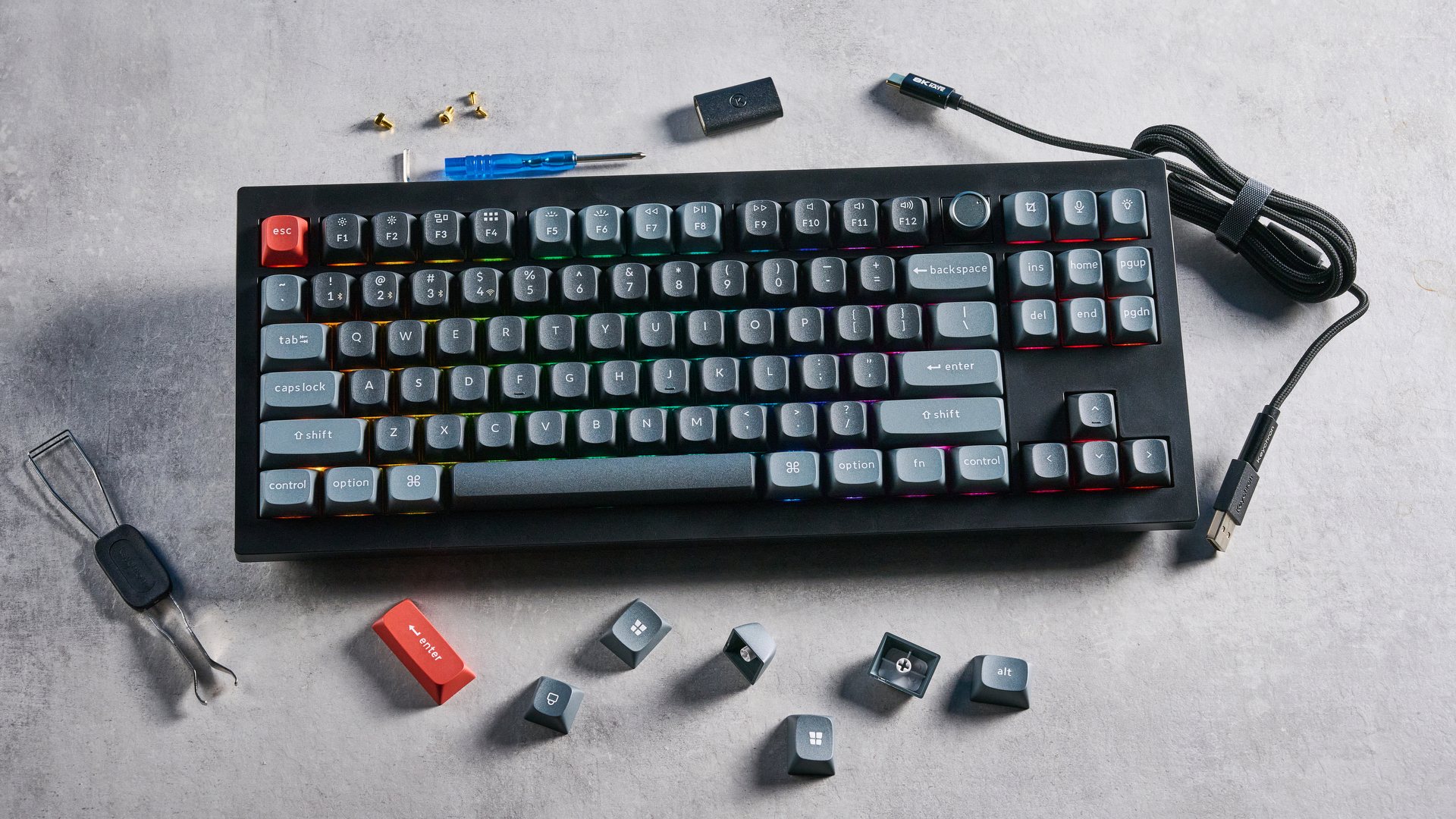
In the digital era, learning to code has transitioned from a niche technical skill to a foundational literacy. Educational platforms globally have stepped up to bridge the gap between curiosity and programming mastery. Among these platforms, Grok Academy stands out as a premier destination for aspiring developers. Known for its highly interactive, auto-graded coding challenges, Grok forces learners to move past passive video consumption and dive straight into the deep end of problem-solving. One of its most iconic, rite-of-passage milestones is the “broken keyboard grok answer” challenge.
At first glance, the problem seems deceptively simple: your keyboard is malfunctioning, inserting unwanted rogue characters into your text, and you must write a Python script to clean it up. Yet, underneath this playful narrative lies a rich tapestry of core computer science concepts. Mastering this challenge requires a firm grasp of string immutability, algorithmic efficiency, loop design, and precise input-output formatting.
The Anatomy of the Broken Keyboard Challenge
To solve any programming hurdle, you must first deconstruct its constraints. The Broken Keyboard problem typically gives a programmer an input string cluttered with specific repeating noise. For instance, the letter ‘e’ might be duplicated three times, or a broken sensor might insert a specific symbol like an asterisk or a hashtag after every vowel.
Your objective is clear: take the messy user input, identify the structural patterns or specific forbidden characters dictated by the prompt, and return a pristine, human-readable string. Crucially, the final output must preserve the original order of valid characters, maintain correct capitalization, and strictly avoid introducing accidental spacing.
While a human can instantly scan a short sentence and mentally ignore the typos, a computer lacks this intuition. You must explicitly teach the machine how to look at characters sequentially, evaluate them against a set of rules, and dynamically construct a solution.
Why Strings in Python Present a Unique Challenge
The primary trap that catches novice programmers in the Broken Keyboard exercise is a fundamental misunderstanding of Python’s data types. In Python, strings are immutable. This means that once a string object is created in the computer’s memory, it cannot be altered in place.
Consider this common mistaken approach: a student loops through a string, detects a forbidden character, and tries to delete it directly from the original variable using an index. Python will immediately throw a
TypeError, stating that the string object does not support item assignment.Because you cannot alter the original string mid-flight, you must pivot your strategy. Instead of destroying the bad characters, you must selectively harvest the good ones. This architectural shift requires initializing an empty “accumulator” string before your loop begins, and progressively gluing valid characters onto it using string concatenation.
Step-by-Step Algorithmic Solution
Let us break down the optimal, high-utility strategy to solve this problem cleanly, ensuring it satisfies the strict parameters of automated testing frameworks.
- Step 1: Capturing User Input
The entry point of the program relies on theinput()function. This halts execution and waits for user interaction. It is vital to ensure that the prompt text inside the function perfectly matches the exercise requirements, as automated graders examine this text down to the byte level. - Step 2: Defining the Target Criteria
You must establish what constitutes a “broken” keystroke. Is it a specific list of vowels? Is it a repeated sequence? Storing these forbidden elements in a dedicated string makes your code highly modular and easy to update. - Step 3: Sequential Traversal (The Loop)
Using aforloop, you iterate through the input text character by character. This approach is highly efficient, running in linear time, which means the execution time grows proportionally with the length of the text. - Step 4: Conditional Logic
Inside the loop, anifstatement acts as a gatekeeper. By utilizing Python’s highly readablenot inoperator, the program evaluates if the current character is safe. If it passes inspection, it is concatenated onto your accumulator string. - Step 5: Output Generation
Finally, theprint()function displays the scrubbed result to the user, finalizing the execution cycle.
The Complete Implementation
Below is the production-grade Python script designed to execute this algorithm seamlessly:
python
def clean_keyboard_input():
    # Capture the corrupted input from the user
    user_input = input("Enter the text to process: ")

    # Explicitly define the corrupt or forbidden characters
    # In this scenario, we assume the keys '#', '*', and '%' are broken
    corrupt_signals = "#*%"

    # Initialize an empty accumulator to construct the output safely
    sanitized_output = ""

    # Iterate through each individual character sequentially
    for character in user_input:
        # Check if the current character is a valid keystroke
        if character not in corrupt_signals:
            # Safely build the new string without mutating the old one
            sanitized_output += character

    # Output the exact filtered string to the console
    print(sanitized_output)

# Execute the system function
clean_keyboard_input()
Use code with caution.
Navigating the Pitfalls of Automated Grading
Writing code that works on your local machine is only half the battle when dealing with interactive learning platforms. Automated grading systems, or “automarkers,” do not read code like human instructors; they pipe pre-determined inputs into your script and check if your output matches their golden reference file perfectly.
Here are the primary reasons why conceptually correct code might still fail the grader:
- Strict Spacing Match: If the prompt asks for
input("Enter text: ")and you typeinput("Enter text:")without the trailing space, the automarker will flag it as a total failure. - Hidden Test Cases: Platforms test your code against unexpected edge cases, such as an input string consisting entirely of forbidden characters, strings with spaces, or completely empty inputs. Your logic must handle these gracefully without throwing an index error or crashing.
- Case Sensitivity Traps: If the broken keys are uppercase characters, checking against lowercase equivalents will fail unless you uniformly standardize the casing using methods like
.lower()during the validation stage.
Broadening the Scope: Advanced Optimization
While string concatenation using the
+= operator is perfect for introductory challenges, it can become a performance bottleneck when handling massive blocks of text. Because strings are immutable, every time you use +=, Python has to allocate a brand new space in memory for the updated string and copy the old characters over.For large-scale data engineering, a more professional approach involves utilizing Python’s built-in array structures and the
.join() method. Instead of building a string character by character, you append valid characters to a dynamic list. Once the iteration completes, you merge the list elements instantly into a single string. This optimization reduces memory overhead dramatically, turning an inefficient process into a streamlined operation.Conclusion
The Broken Keyboard challenge at Grok Academy is much more than a simple filter exercise. It serves as a vital bridge that transforms a student from a casual reader of code into an analytical programmer who understands data structures, memory allocation, and algorithmic design. By understanding string immutability and configuring robust loops, you lay down the exact mental framework required to tackle advanced topics like data parsing, regular expressions, and backend software engineering.










Leave a Reply